
Fishing Reports: Launch 2026
Bonita Springs to Marco Island

By Captain Barry Cuda
Well, we’re definitely moving out of the cold water patterns of the winter. Temps are hitting high 70s. The big sheepshead will be moving offshore. Some big ones will still be around, but the schools of big ones that were on the oyster bars and pilings will have moved offshore.
The trout are moving in from the reefs and nearshore grass. Look for them in the passes 9 to 14 feet deep. Trout respond well to shrimp under a popping cork or shrimp on a jig. Pompano are in the passes too; small jig with a sand flea or piece of shrimp works well. Fish at various depths, near the bottom.
Starting to see some manatees around. Be aware of the summer speed limits. Slow speed out of the channel, 25 mph in the channel. Lots of dolphins too! For fun, when you get near some, throw a big wake. Usually just below planing speed works best. They will often use the opportunity to surf your wake and even jump for you so have your camera ready!
Tarpon are showing up with the biggest concentration in Boca Grande pass. The windy weather has a lot of the back water stirred up now. Shallow water stirs up easily. Fish don’t like what we call “milkshake” water. They will go elsewhere. When you want to find fish, you need to find clearer water. Not crystal clear; in crystal clear water, they get spooked. They fear predators, and also they’re not used to it.
Mackerel and bluefish are nearshore, and the kingfish will be showing up any day now. You’ll see giant schools of bait thrashing the water with flocks of birds diving on them. When you spot flocks of diving birds, ease nearer to the “boil.” I’ve seen some 100 yards in diameter. It’s awesome!
When you get within casting distance, almost any bait or lure will get smashed instantly. Also, often a school of kingfish will be under the school of mackerel, picking off the scraps and wounded. A slightly sinking bait or lure works great.
In the backwater, a boil is usually a school of jacks busting on the bait. Lately, though, I’ve seen the rare sight of catfish causing a boil!
For fishing tips, check out my Facebook page: Capt. Barry Cuda Charters at facebook.com/CaptBarryCuda/
Tight lines, and take care,
Capt. Barry
Tampa/St Petersburg
By Capt. Dylan Hubbard
May brings variety, movement and opportunity across inshore and offshore waters along Florida’s central Gulf Coast, as warming waters unlock one of the most diverse and productive fisheries of the year. From the shallows of Tampa Bay to the deeper nearshore ledges, anglers fishing out of Hubbard’s Marina find themselves in the middle of a full-on spring bite defined by movement, variety, and increasing consistency.
Inshore, the story is all about migration and momentum. Snook are beginning their annual push from the back bays toward the passes and beaches, staging around points, cuts, and moving water where bait is plentiful. Early mornings and late evenings are especially productive, offering anglers prime windows to intercept these prized gamefish. Alongside them, redfish schools remain active across oyster bars, mangrove shorelines, and shallow flats, often revealing their presence through nearby mullet activity.
Supporting players are filling out a strong inshore lineup. Mangrove snapper are showing up in greater numbers around docks and bridge pilings, usually responding well to light tackle and small natural baits, while trout hold on in deeper grass. Flounder add to the mix around sandy drop-offs.
Just beyond the beaches, nearshore action is both steady and often fast-paced. Lane snapper are a standout, enjoying feeding on squid, shrimp, and cut bait. Bottom fishing remains productive as well, with red grouper holding on hard bottom, ledges, and potholes.
The convergence of migrating inshore species, steady bottom fishing, and high-energy pelagic action help create a well-rounded experience for anglers of all skill levels. The fish are here, so get your line in the water!
Sarasota to Englewood Fishing Report
By Captain Matt Davie
Hello all, finally shrugged off those sweatshirts. Now it's time that most of us wait for — Can you say Tarpon!
Let me start out by saying the way I like to fish for them. Tackle is 8-10K size spinning reels; 8-9 foot rods with heavy action fast tip. Tommy Stephens of Light Tackle Lounge makes a powerhouse custom rod for these fish. Any tackleshop in the area will have other brands that work. Bullbay Rods has another go-to rod.
I run a 30-lb and 40-lb main line, along with 60-80 leaders, 7/0 to 9/0 circle hooks. On an outgoing tide or first light I prefer crabs. As that sun gets up I'll put out live and cut threadfins and pin fish. Passes on the outgoing beach on any regular tide. Switch gears when you're down with the tarpon, hit the snook on the beach or passes. Remember it's summer time and water temps are up, so early or late seems to produce the most fish. If you're in the midday sun, it will be deep or docks.
Want to try your luck or skill? We have a great tournament in the area. The Sarasota Slam tournament which has an offshore and inshore division. Great way to get your anglers into the competitive feel. The Sarasota Slam inshore tournament consists of snook, redfish, and trout. That my friends is your goal year round.
Let's also work on our cast-net skills. If you're in the have-never-thrown-one category, let's start with a smaller net and work our way up. Suggestions a little better quality bet will open and throw more consistently than a Wally World special. I've always started with an 8-foot net that will catch your pilchards and pins. I now throw a 10-foot net; it's comfortable and with my stature a 12-footer wears me out. Humpback cast nets from Lee Fisher Sports is one of the best out there. Not only that it will last, its one of those where you get what you pay for.
Last but not least, if you have kids we put on a kid’s fishing camp during the summer: the Sarasota Fishing Camp. We have open enrollment online for ages 8-14 years old. We fish 5 days of the week, teaching how to throw a net, knot tying, conservation, and what to do on the water. Come get them started on life memories.
Thank you, Captain Matt Davie
Charlotte Harbor to Ft Myers
By Robert Lugiewicz
Winter's cold fronts are behind us and the daily summer thunderstorms are still in the future, which means it's a fantastic time to get out in the Gulf. There are lots of opportunities out there right now, including abundant pelagic predators taking advantage of the baitfish schools.
Trolling with diving plugs or spoons rigged behind inline planers is one of the simplest techniques you can use, and also one of the most productive. If you're using a planer, run the lure about 10 or 12 feet behind it. It's also advisable to use a wire leader on both the front and the back of the planer, just in case a kingfish decides to chomp that instead of your spoon.
One of the biggest mistakes people make when trolling in the Gulf is using lures that are too large. Big baits catch big fish (or so the saying goes), but that can result in a lot less action. If you want to keep rods bent, remember that chipmunks eat peanuts, but so do elephants. A small lipped plug, spoon or bucktail jig about 3 to 4 inches long will get a lot more customers and keep you busy on the reel. If you are trolling a spread, the smallest lure should be the farthest back.
Even if trolling is not your thing, dragging a bait behind you as you move from spot to spot or while you're finding the best areas of a reef to fish is just a good idea. Traveling at 4 to 7 knots will also allow you to get a good scan of the bottom, making it easier to find potential fishing spots that you might miss if you're going faster.
For bottom fishing, most anglers are more familiar with using the standard live or dead baits, but you might be surprised at how many fish you'll catch by dropping a butterfly jig down.
While you can certainly drop a pile of cash on specialized slow pitch gear, you can bounce a jig with pretty much any tackle beefy enough for pulling on grouper or amberjack. It's really not that different from fishing with old-school diamond jigs — which, by the way, still work quite well.
Think about size with these lures also. Again, you can get big fish on smaller baits, but a jumbo jig will appeal only to the largest predators. Most of us like to put some smaller snapper in the box as well, but you do you.
If you're looking for the latest Charlotte Harbor fishing reports, be sure to check out our YouTube channel, Fishin' Frank's Fishin' Club. We are posting updated reports every Friday, along with a random assortment of shows throughout the week. Don't forget to subscribe to be notified when a new video drops: youtube.com/@FishinFranksClub
Tarpon Springs to Inglis
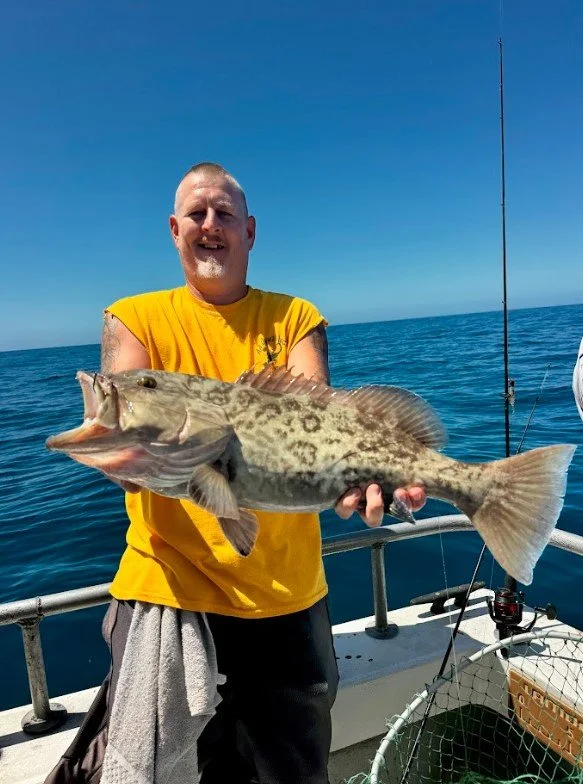
Fishing is staying steady, we’re starting to transition into our summertime patterns, the waters are starting to warm up and the fishing is coming to life. We have been seeing Cobia on the near shore rock piles and wrecks, been producing good bites with live pin fish, as well as some of our larger artificial swim baits!
Moving a bit further offshore, our day trips on the Thunder Party boat have been crushing so many different species! Including hogfish, mangrove snapper, grunts, porgys, gag and red groupers. The bite has been keeping the entire boat's rods bent, and happy faces all around!
Now last but not least, moving even further offshore to the 80 to 120-mile range, my oh my what I can say … the bite is on fire! Huge mangrove snappers, yellowtail snappers, big fire truck red groupers …. And we have also been seeing some African pompano showing up here and there as well. Book your trips with us at thunderfishingco.com.
Thank you,
Capt Chaz
352-597-3900
chazcorradini@yahoo.com