
Amphibious Design
See how Ocean Pad is rethinking coastal living.
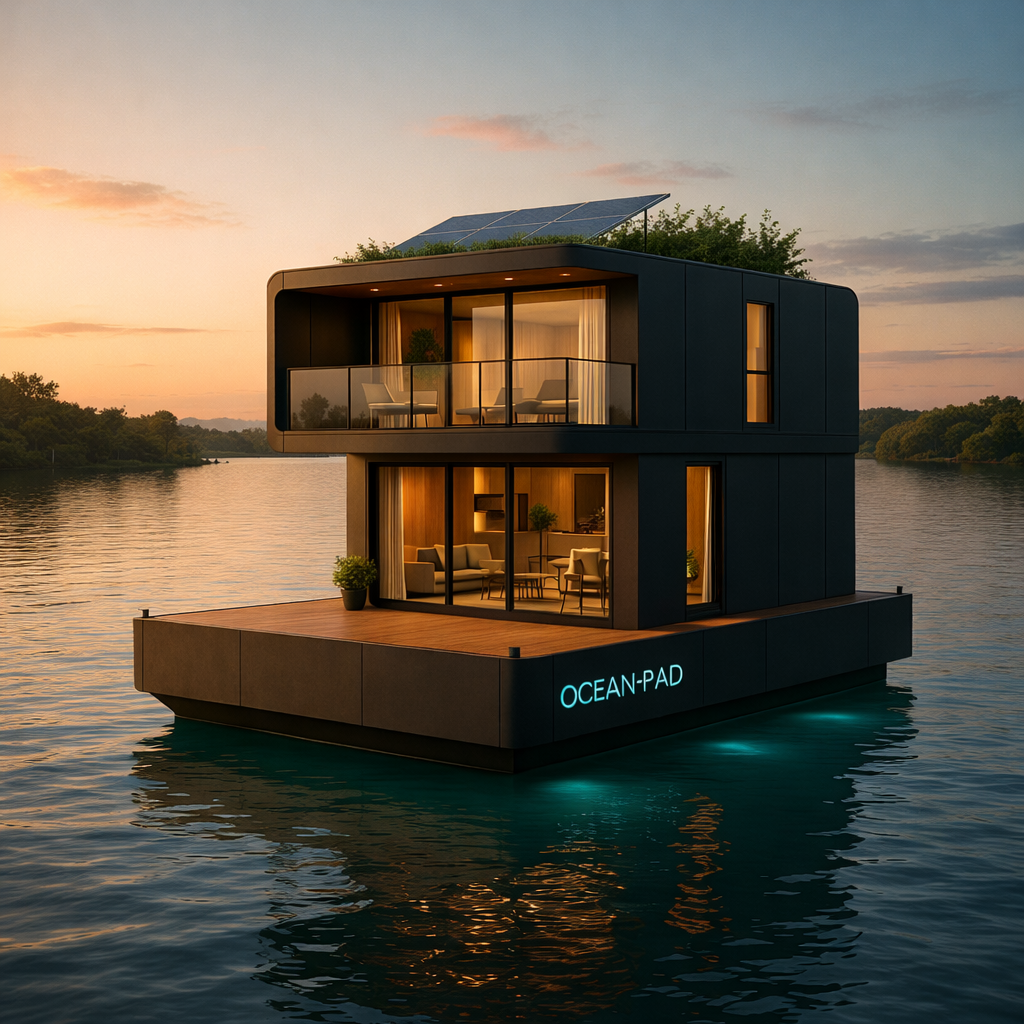
Across Florida and other coastal regions, communities are re-examining how they build near water. Flooding, tides, and seasonal storms are not new challenges, but they are prompting renewed interest in structures that can adapt rather than resist. In Southwest Florida, Ocean Pad is advancing an alternative approach: amphibious living platforms designed to move with water, return to place, and remain functional through changing conditions.
Ocean Pad’s structures are neither traditional buildings nor conventional vessels. Instead, they are engineered as amphibious platforms that rest on land or in shallow water under normal conditions, then safely float when water levels rise. When flooding occurs, the structure lifts vertically while remaining securely guided and tied in place. Once water recedes, it settles back to its original position — without permanent displacement or structural damage.
This design philosophy reflects a shift in thinking. Rather than attempting to permanently block or resist water, Ocean Pad embraces controlled movement. By allowing the structure to rise and fall as conditions change, stress on the building is reduced and the risk of damage during flood events is significantly lowered. Occupants are not forced to abandon the structure during high water, and recovery time after flooding is dramatically shortened.
From a risk and planning perspective, this distinction matters. Traditional, foundation-based buildings in flood-prone areas are vulnerable precisely because they remain fixed while water moves around them. Ocean Pad platforms, by contrast, are designed to avoid prolonged flood exposure altogether. As an amphibious structure intended to float through inundation rather than be submerged, the system sidesteps many of the conditions that typically drive flood-related losses and insurance requirements for conventional construction.
Structurally, Ocean Pads are built using industrial-grade materials and reinforced steel hulls paired with engineered flotation systems. The modular, container-based approach allows for multi-level configurations and a wide range of uses, from full-time residences to seasonal homes, emergency response units, or research platforms. Each system is designed with durability, longevity, and adaptability in mind.
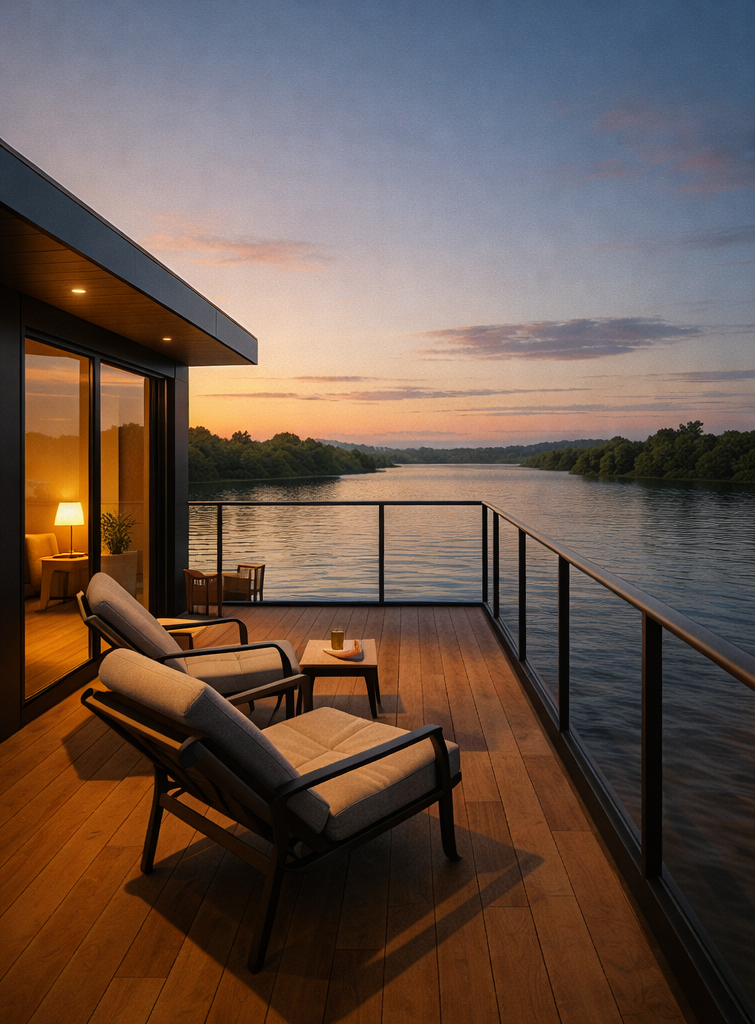
Self-sufficiency is another core feature. Ocean Pads are engineered to support off-grid or hybrid power systems, including solar energy, battery storage, and optional backup generation. Integrated water and waste-management systems reduce dependence on municipal infrastructure, which can be disrupted during storms or high-water events. The goal is continuity — maintaining basic services and livability regardless of temporary environmental conditions.
Recent storms across Florida and other coastal regions have left many homeowners facing a difficult reality. Entire structures were lost, and rebuilding is no longer as simple as replacing what once stood. Updated building codes now require elevated foundations, deep pilings, and extensive flood-mitigation measures that significantly increase construction costs. In many cases, owners are discovering that rebuilding on the same lot is no longer financially viable, even when insurance coverage is present.
Compounding the issue, updated FEMA flood maps have expanded high-risk designations across large portions of coastal and inland waterfront areas. Properties that previously carried minimal flood exposure are now subject to elevated flood plains, mandatory insurance requirements, and higher premiums tied to foundation-based construction. For many families, the long-term cost of compliance has become as burdensome as the initial loss itself.
Ocean Pad approaches this challenge from a different direction. Because the platform is designed as an amphibious structure — engineered to float during flooding rather than resist it — it avoids the permanent flood exposure that drives most flood insurance requirements. In practice, this means Ocean Pad units are not required to carry flood insurance even in locations where traditional, foundation-based buildings must. Owners may choose to carry vessel-style property or liability coverage, but it remains optional rather than mandatory.
The financial model differs in other important ways as well. Ocean Pad platforms are not subject to annual property taxes. Instead, a one-time sales tax is applied at the time of purchase, eliminating a recurring cost that often escalates over time in waterfront jurisdictions. For long-term owners, this distinction can represent a substantial reduction in lifetime ownership expenses.
From a systems perspective, Ocean Pad emphasizes proven reliability over experimental technology. Power and energy management systems draw from established marine-grade manufacturers such as Victron Energy and Schneider Electric, while automation and monitoring systems leverage industrial-grade controls from Siemens. Water treatment and desalination components are sourced from manufacturers with decades of offshore and maritime deployment experience, and full-time satellite internet connectivity is supported through Starlink, ensuring communications remain online regardless of local infrastructure conditions.
Ocean Pad’s approach is not being developed in isolation. The company is actively engaging with coastal cities, counties, and regional stakeholders to explore how amphibious platforms can complement existing recovery and resilience efforts, and to further develop solution-oriented relationships focused on resilience, adaptability, and long-term planning. These conversations include municipal planners, emergency management officials, and public-sector programs focused on post-flood housing, infrastructure continuity, and long-term adaptation. Rather than proposing a one-size-fits-all product, the company is positioning its platforms as part of a broader toolkit for communities seeking flexible, water-compatible development options.
In many communities, officials are searching for solutions that allow displaced residents to remain connected to their home regions without committing to repeated cycles of loss and rebuilding. Ocean Pad platforms offer a flexible option, one that can be deployed temporarily, relocated as conditions evolve, or integrated into broader redevelopment strategies without permanent land disturbance.
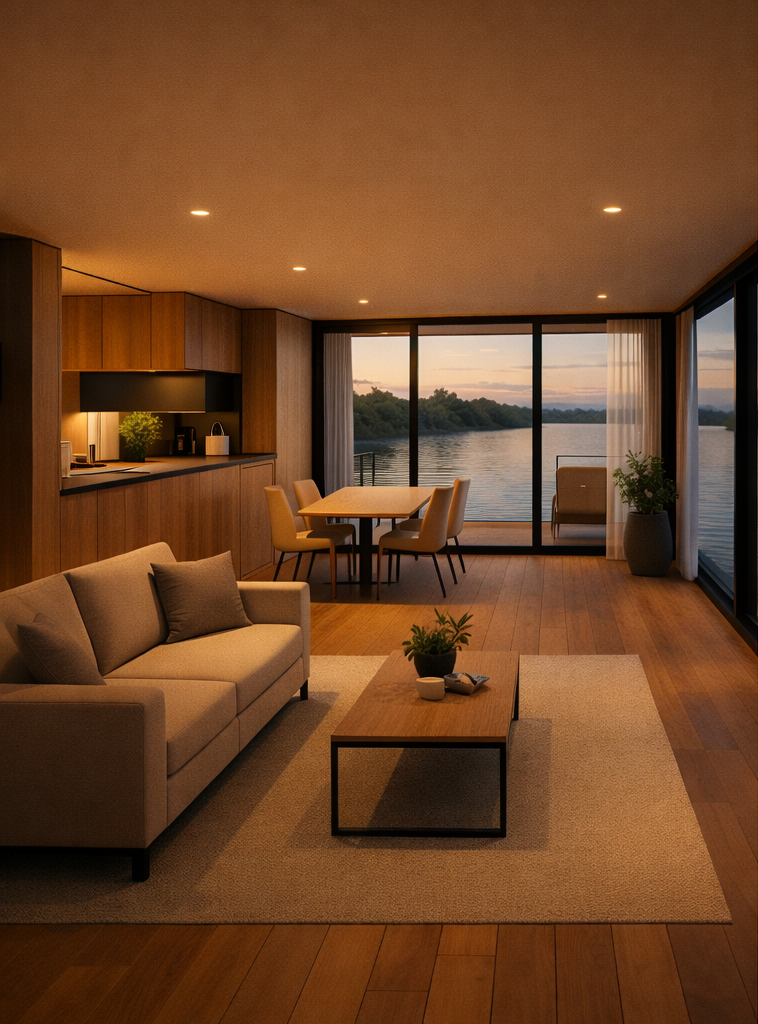
Alongside public agencies, Ocean Pad is also developing relationships with regional private distributors, marine service providers, and systems integrators to ensure long-term support, maintenance, and operational reliability. This hybrid model, combining public coordination with private-sector execution, allows the platform to scale responsibly while remaining adaptable to local needs. By positioning its technology as a collaborative tool rather than a replacement for existing systems, Ocean Pad aims to support communities navigating change, not disrupt them. The goal is alignment: with local priorities, regional recovery efforts, and practical, solution-oriented planning.
Beyond resilience, Ocean Pad introduces a level of flexibility rarely found in residential design. Because the platforms are not permanently tied to a single foundation, they can be relocated. An Ocean Pad can be repositioned within a region, moved to a different coastline, or deployed to entirely new locations. This mobility allows owners to adapt to environmental changes, regulatory shifts, or personal preferences without rebuilding from scratch.
Still in its early growth phase, Ocean Pad represents a broader evolution in how people think about permanence, resilience, and place. As communities seek solutions that balance livability with long-term adaptability, amphibious design offers a compelling middle ground between fixed construction and full mobility.
Readers interested in learning more about Ocean Pad’s vision, design philosophy, and available platform models can explore additional information at oceanpadlife.com, where the company outlines its approach to adaptive living and the future of water-compatible architecture.
For regions defined by water, the next chapter of coastal living may not be about pushing nature away — but about learning how to move with it and return home when the water recedes.
Disclaimer:
Insurance availability, coverage requirements, and tax treatment may vary by jurisdiction, use case, and regulatory classification. Ocean Pad platforms are designed as amphibious structures and are evaluated differently than fixed, foundation-based buildings; however, final determinations regarding insurance, taxation, and permitting are subject to local, state, and federal authority. Prospective owners are encouraged to consult with insurers, tax professionals, and local regulators to confirm applicability based on location and intended use.