
Survey Says…
Preparation, prevention, and lessons learned below deck.
By Jack Clayton, Clayton Marine Surveys - Fort Lauderdale, FL
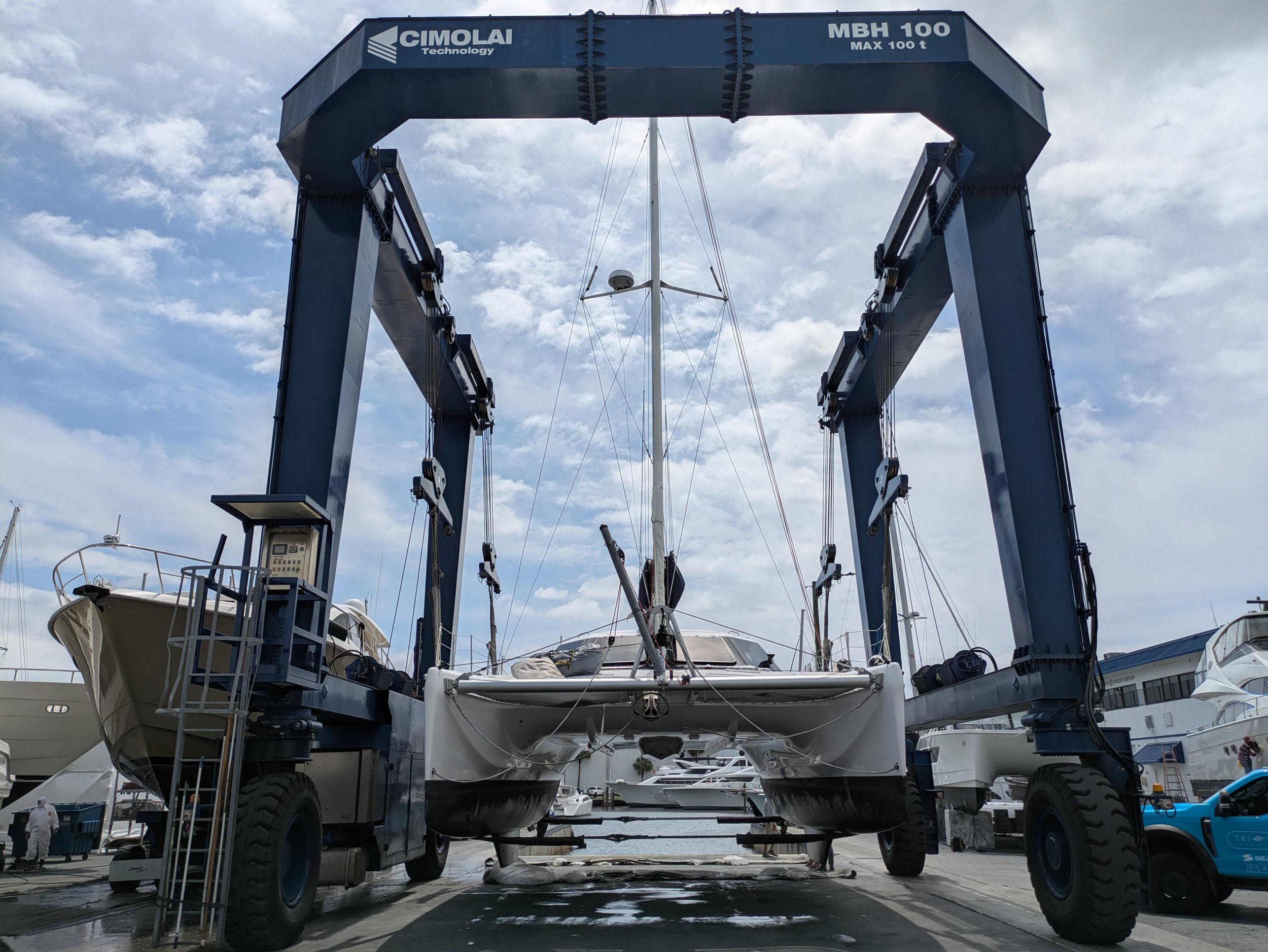
How to Prepare for a Marine Survey
Whether you are the buyer or the seller, a little preparation is the difference between a thorough marine survey and one full of asterisks. After years of crawling through boats, here is what I wish every party knew before survey day.
1. Scheduling and access. The vessel needs to be available both in and out of the water: a haul-out at a yard with the correct lift capacity and haul-out well, and a qualified captain to operate the boat during the sea trial. Under no circumstances does the buyer hire the captain or run the vessel. The hallmark of a good broker is that they quietly handle all of this; they schedule surveys every week, know which yard fits your boat, and have the relationships with lift operators and yard managers to make the day go smoothly.
One tip from hard experience: if the boat's slip is a long run from the haul-out yard, book a transient slip at or near that marina. It adds a little cost, but it removes the time pressure and lets the surveyor inspect the engines while they are still cold, which is critical for establishing a baseline before they run. It also spares them an engine bay that has reached dry-sauna temperatures, where nobody does their best work.
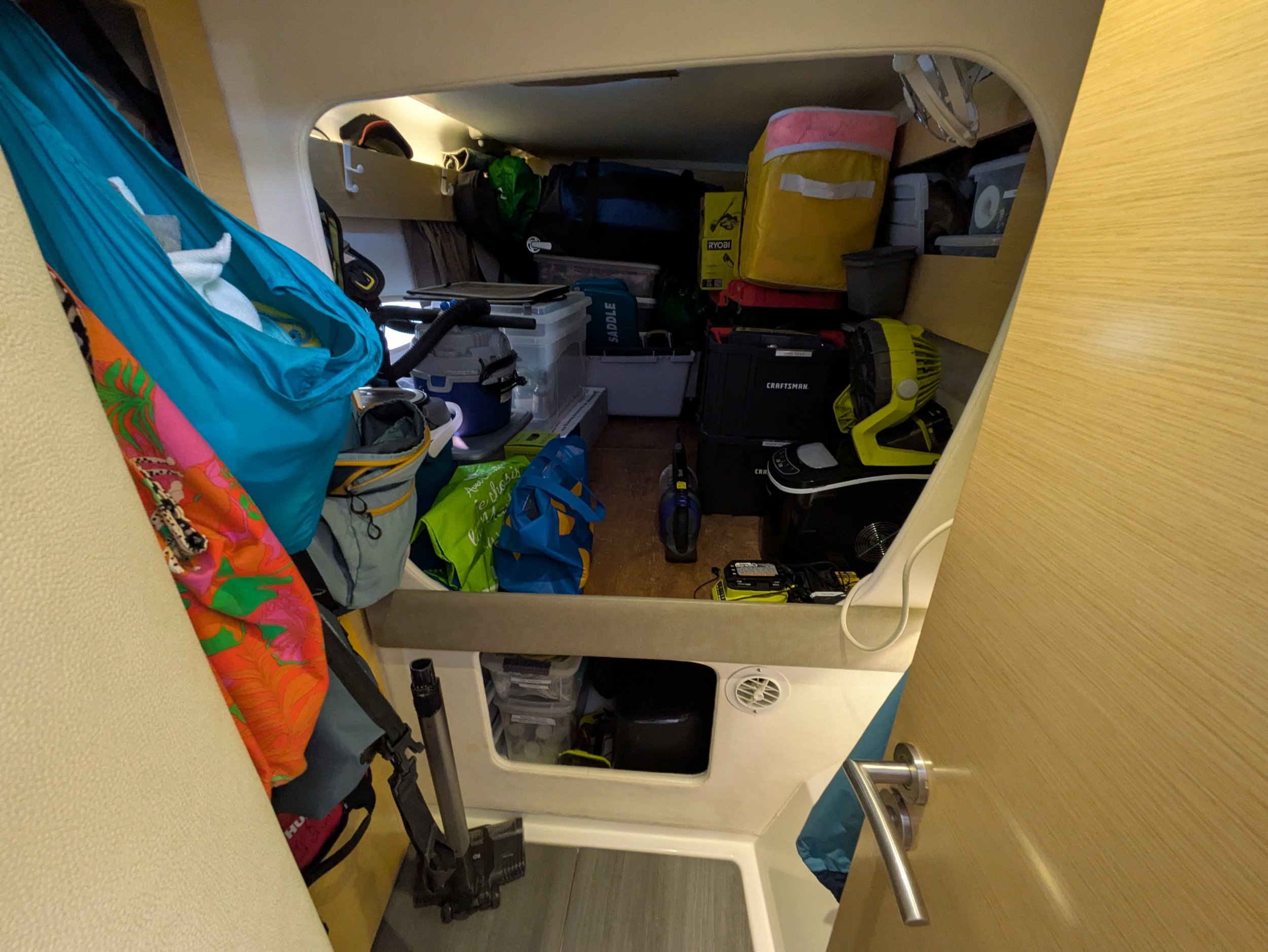
2. Empty the boat. A pre-purchase survey is an extremely thorough investigation, and the surveyor must open every locker, hatch, and compartment. When those spaces are packed with the owner's personal effects (occasionally including items of a personal nature that neither of us wanted to discover), most surveyors will simply skip that locker. That is not laziness; it is triage. Every minute spent excavating gear is a minute not spent inspecting a critical system, and if enough of the vessel gets skipped, the buyer's insurance company may reject the survey and require reinspection.
Sellers, if you are hoping an inaccessible area keeps a problem hidden, know that surveyors assume exactly that. We write the area up as inaccessible, call for it to be opened and inspected, and the insurer will insist, usually right up against the contract deadline. That stunt can derail an entire sale.
3. Clean the bottom. Boats listed for sale sit at the dock growing beards. If I cannot see the hull, I cannot see cracks, and heavy growth interferes with percussion soundings. Most yards offer pressure washing, but that burns precious survey time, and lost time means skipped inspection points. A good listing broker has a professional diver clean the bottom a few days before the survey, every time, no matter how clean you think it is.
4. Gather the paperwork. Manuals, service records, receipts, and documentation of any modifications. A well-kept stack of records tells the surveyor, and the buyer, a story about how the vessel has been cared for.
Do these four things and your surveyor spends the day actually surveying. The report comes back complete, and everyone involved, from buyer to insurer, gets what they paid for.
Acid in the Bilge:
A Cautionary Tale
On a recent pre-purchase survey of a sailing catamaran, I opened the starboard hull bilge and sighted a bottle of muriatic acid stowed a few inches from a seacock. I'm sure the owner meant well; it was probably aboard for cleaning the heads. But that bottle earned a Priority 1 finding in my report, with language nobody wants to read about their own boat: structural damage and/or sinking hazard.
That sounds dramatic for a sealed bottle. It isn't.
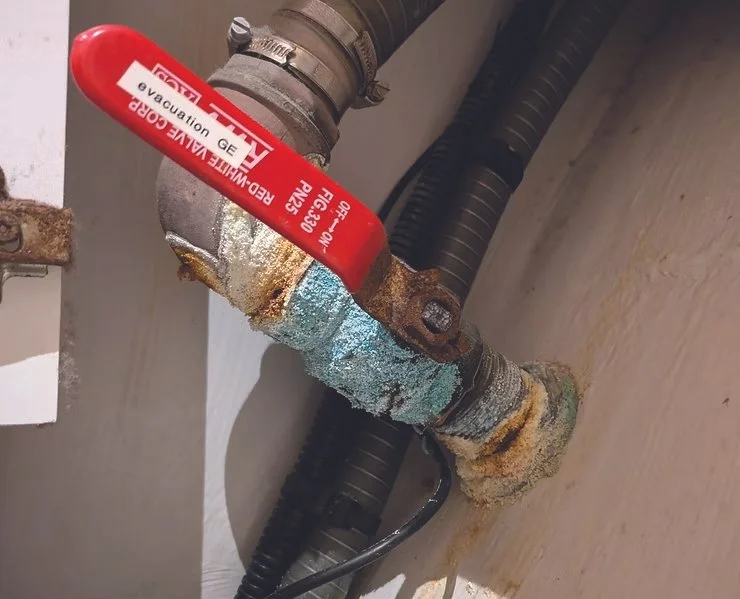
Most boaters assume plastic is impervious to acid. Not so. Marelon seacocks, the “plastic” through-hull valves fitted on thousands of production boats, are actually glass-reinforced Zytel nylon, and nylon is one of the plastics that concentrated hydrochloric acid attacks readily. Muriatic acid also degrades polyester resin and destroys polyurethane adhesives. That last one matters more than most people realize; where older boats had stringers and ribs glassed in by hand, most modern yachts get their stiffness from a structural liner bonded into the hull with polyurethane adhesive, and much of the cabin furniture is bonded to that liner as well. An acid leak working on those bond lines is an invitation to structural failure, which, by the laws of boating, must occur at the worst possible time, most likely in a nasty seaway. Imagine coming down from your night watch to find the entire salon gimbaling inside the hull. Not likely, but the physics aren't that funny.
Here's the part that surprises people: the bottle doesn't even need to leak. Sealed jugs of muriatic acid vent corrosive fumes continuously. I keep mine at home in a gasketed Rubbermaid bin, well away from kids and animals, and every time I crack that lid I get a face full of harsh fumes. In a closed bilge, those fumes quietly go to work on every metal through-hull fitting, busbar, sensor, and bilge pump down there.
The bilge is a poor stowage locker to begin with. Loose gear becomes a missile in a seaway, and the bilge is where your seacocks live. Missile plus seacock equals a bilge with new water jets that don’t easily switch off. A tumbling jug of acid that gets punctured, or simply pops its cap, is the full catastrophe.
Chemistry has presented issues on my surveys before. Last year I found extreme corrosion on a bronze seacock that was only six months old. The culprit turned out to be a leaking washing-machine discharge line dripping laundry detergent into the bilge, where the ammonia stripped the protective oxide layer right off the metal. A well-kept boat, a competent owner, and a fitting nearly destroyed in half a year by laundry soap.
The lesson from both boats is the same. As skipper, your job is to imagine everything that could reasonably go wrong and head it off: if “A” happens, what follows? Read the label on everything you carry aboard, keep corrosives and oxidizers off the vesselentirely, and never treat the bilge as storage. Safe cruising!
Bio: Jack Clayton is a professional marine surveyor and founder of Clayton Marine Surveys, based in Fort Lauderdale, with more than a decade of hands-on experience as a marine technician, delivery captain, charter captain, and instructor, he specializes in pre-purchase, insurance, damage, and appraisal surveys. Clayton holds credentials from the Society of Accredited Marine Surveyors (SAMS) and the Association of Certified Marine Surveyors (ACMS), is an ABYC Certified Marine Electrician and Certified Marine Standards professional, a USCG 100-Ton Master Captain, and a Florida-licensed all-lines insurance adjuster. Learn more about Jack and Clayton Marine Surveys at clayton-marine-surveys.com.
Photos courtesy of Clayton Marine Surveys.