
The Ins and Outs of Inlets
By Janet Gannon of Adventure Blue Sailing
By the time Michael G realized his mistake, it was almost too late. He had trusted his navigation app to route him from Brunswick Georgia to the marina on nearby Jekyll Island. The app routed him out into the Atlantic via St. Simon’s Inlet and back into St. Andrews Inlet. The plan seemed logical, as his ETAP 30 drew 6’2” and the Intracoastal Waterway at Jekyll Narrows has a reputation for impossibly skinny water. But St. Andrews is also notoriously sketchy, with shifting sands and breaking seas. Few boats use it.
“Coming into St Andrews, the depth was falling significantly. I looked out and about 30 feet ahead of me, I see white on the water. And it’s birds.” Michael was near panic, realizing the danger he was in.
“I was scared to death, honestly. I was debating, do I call Seatow, or TowBoat US?” Luckily it was calm. Michael overcame his fear and eventually picked his way through the inlet, touching bottom repeatedly in the process. It’s not an experience he wants to repeat. “Honestly, I felt like it shaved years off of my life. By the time I got to Jekyll Marina, I didn’t want to leave. I stayed there for a month.”
Although some might judge Michael for putting too much trust in his navigation app, he’s not the first person to have difficulty transiting an inlet. Ask any group of boaters about their scariest moments and you’ll hear of a few near-disasters involving an inlet. Inlets tend to have strong currents as tides push water through narrow channels. Longshore currents move bottom sediments, making markers and charts unreliable. Strong winds and waves add even more challenges to overcome. But there are ways to make transiting inlets safer and more comfortable.
Judy Hildebrand, a delivery skipper since 1985, says she chooses all-weather inlets. “If it’s an all-weather inlet, it might be unpleasant going in, but you’re going to get in okay.” Although all-weather or “class A” inlets aren’t formally defined, they are commonly deep, well-marked, and usually dredged for large ships to transit. Hildebrand will use other inlets, such as Ponce Inlet or St. Augustine, only in dead calm, perfect conditions while avoiding ebb tide. “Along the east coast of the US, I don’t want an east wind and an ebb tide; then you have wind and current opposing. It can be pretty snarly.”
Hildebrand notes that local knowledge is a valuable tool in a skipper’s arsenal. “You can always talk to SeaTow or TowBoatUS and get the inlet conditions. I do that all the time in St. Augustine.” She reads all she can about an inlet and consults multiple navigation sources, noting that modern navigation data is very detailed and useful if you update your charts often. “The more information you can get on an inlet, the better. It’s good to have more than one source of information. But you also have to trust your eyeballs.”
Having a plan, and a backup plan, is key to a successful transit as well. “I always put a route into my GPS, from start to finish. If you get distracted at all, you can use that route to see where you are, then check your surroundings to see if that looks right.” On sailboats, she always has a sail up. “You need a sail up when you go in and out of inlets. If you lose an engine on the way in, you better have a plan B and be thinking 10 steps ahead. What am I going to do if something happens? If you have a sail up you might be able to turn around and sail out of there.”
Hildebrand’s planning was tested while entering Fort Pierce Inlet in a brand new 34-foot Tartan with less than 29 hours on the engine. The plan was to motorsail through the inlet. The boat was gently heeled and making smooth progress. Once inside the inlet, Hildebrand and her crew attempted to turn into the wind to drop the mainsail, only to discover the engine had no thrust. They continued sailing to a nearby anchorage, dropped the hook, and assessed the situation. Somewhere between Palm Beach and Fort Pierce they had lost their propeller. Having a sail up was so effective, the crew didn’t know they had a problem until they were out of danger.
Sometimes the best thing to do when using an inlet is to wait for better conditions. For boats in the ICW, it may be best to stay inside. If you’re in the ocean trying to enter an inlet in questionable conditions, heaving-to may be the best option in a monohull sailboat. “Many people don’t realize you can heave-to, and all of the craziness stops. Just give yourself some sea room. Then you can wait.” Catamarans and trawlers may have to jog back and forth offshore to wait for favorable conditions.
BIOGRAPHY: Janet Gannon has lived and boated from Maine to Florida. She and her husband Damon spent a year cruising on their Pacific Seacraft 37 Fulmar. She learned to sail at YMCA camp because the head sailing counselor was voted “cutest staff member” by the campers.
More Tips for Navigating Inlets:
Using AIS can help identify large ships transiting the inlet.
Monitoring both VHF channel 13 (for large ship transmissions) and 16 (for general hailing) can help you communicate with any traffic you may encounter.
If you have a dodger, rolling up windows can aid in visibility, especially at night.
Exiting an inlet is usually safer than entering it. When approaching from offshore, breaking waves are hard to see and shore lights can obscure markers and confuse mariners at night.
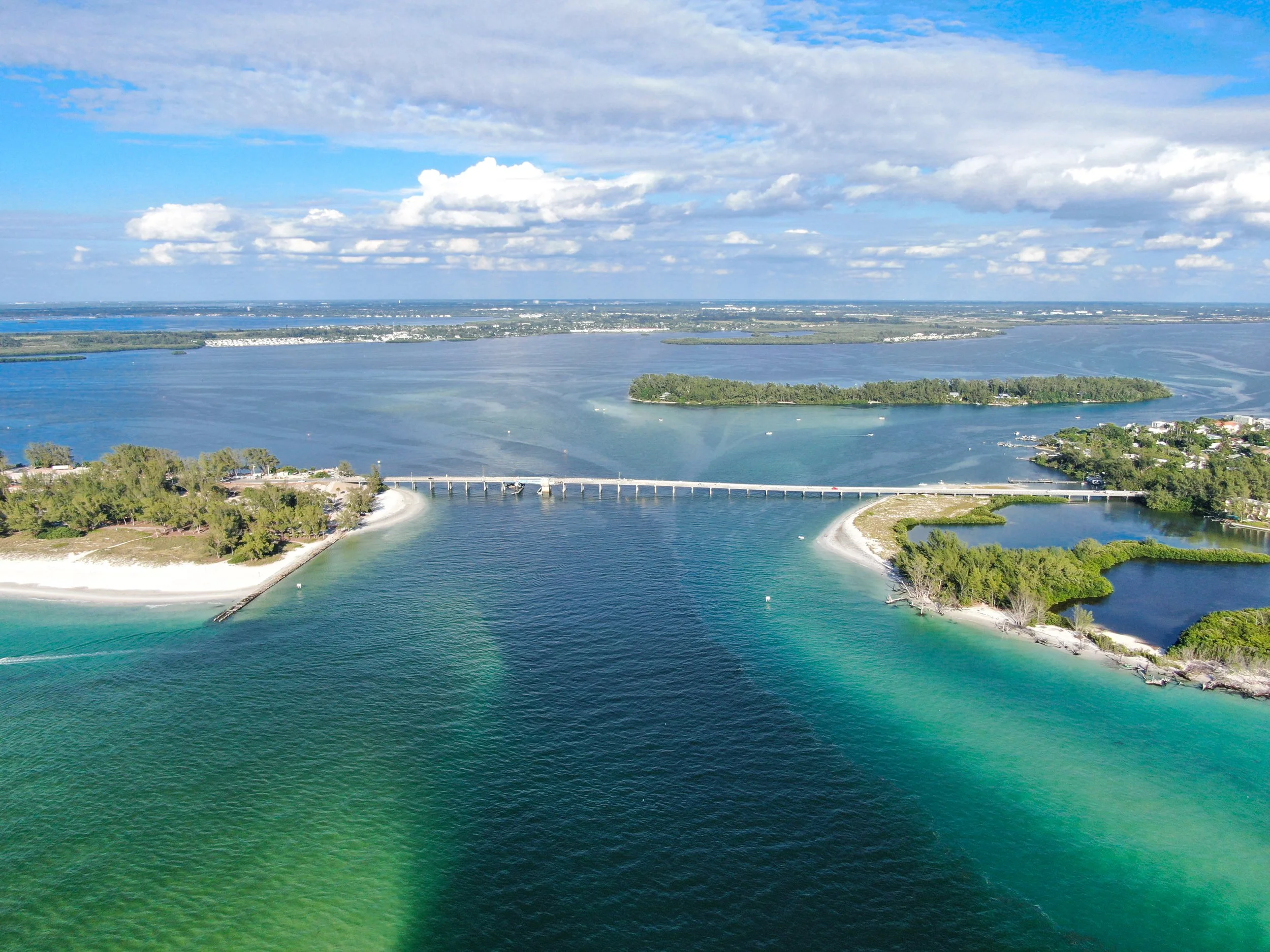
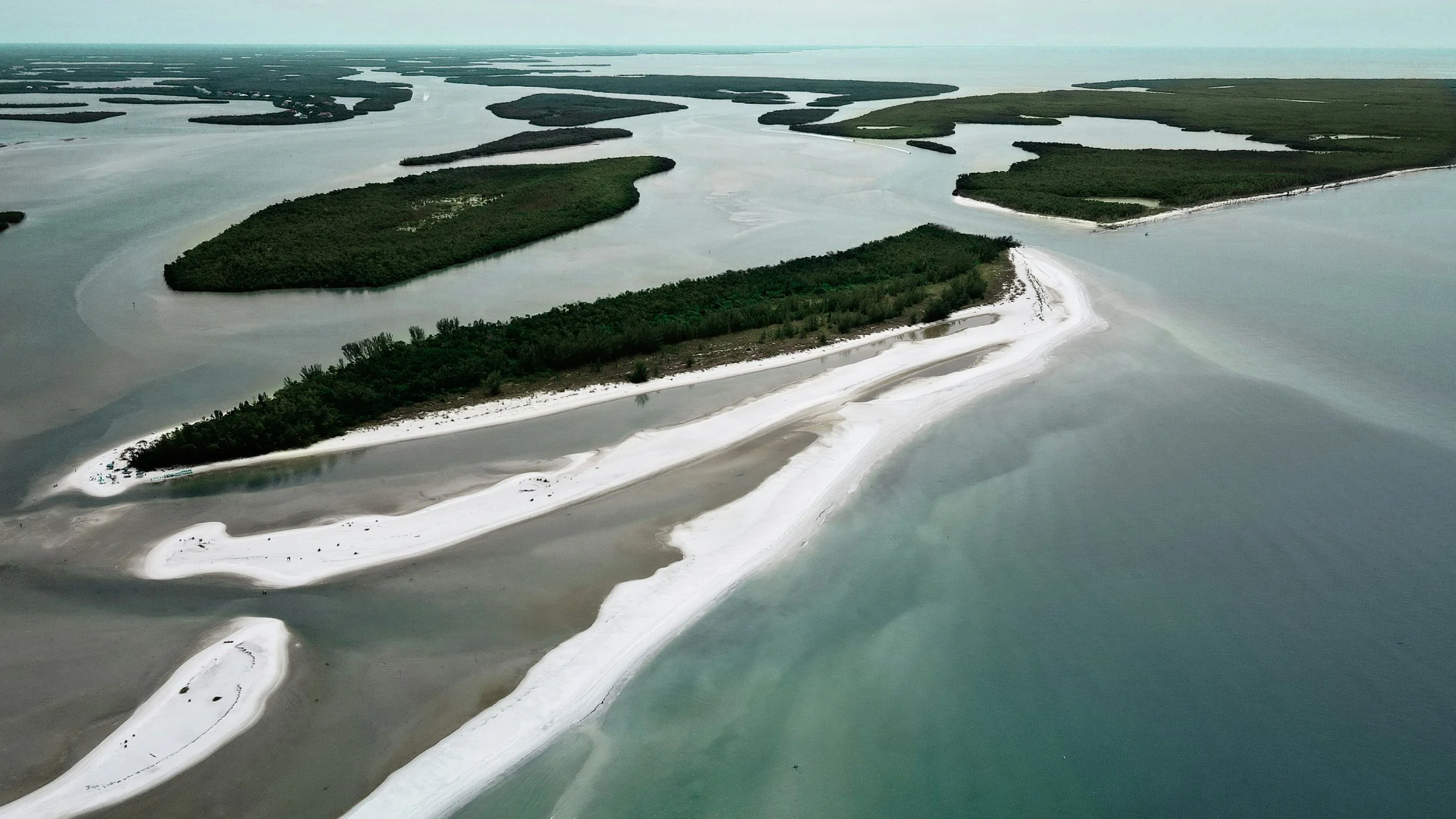
Inlet Photo courtesy of Unsplash.
Anna Maria Island photo courtesy of Adobe.