
Summer Storage in Florida: Does It Make Sense to Haul Your Boat?
Courtesy of Indiantown Marine Center
In much of the country, hauling a boat signals the end of boating season — a response to falling temperatures, freezing water, and winterization checklists. Florida, however, plays by a different set of rules. Here, summer is not an off-season but is instead a test of preparation, resilience, and decision-making. With hurricane season overlapping the hottest, most humid months of the year, boat owners are faced with a different question entirely: Does it make sense to haul your boat for the summer?
The answer depends on how you use your vessel, where it’s stored, and how prepared you are to manage the unique risks of Florida’s summer environment.
A Different Kind of “Off-Season”
Unlike northern climates, Florida’s “off season” doesn’t shut boating down, but it does change behavior. Many owners travel north to escape the Florida summer heat, reduce usage, or shift their time on the water to early mornings and evenings. Afternoon thunderstorms become routine, and the looming presence of tropical systems which can cause sudden, temporary spikes in water levels and localized surges, introduces a level of uncertainty that can’t be ignored.
For boats left in the water, hurricane preparedness becomes essential. This often means having a detailed plan for relocation, securing dockage in a protected harbor, or coordinating with marina staff under tight timelines. Insurance companies may request owners to have a “Hurricane Plan” to continue their coverage. Executing these plans can be challenging, especially for absentee owners or during rapidly developing storms.
Dry Storage vs. In-Water Storage
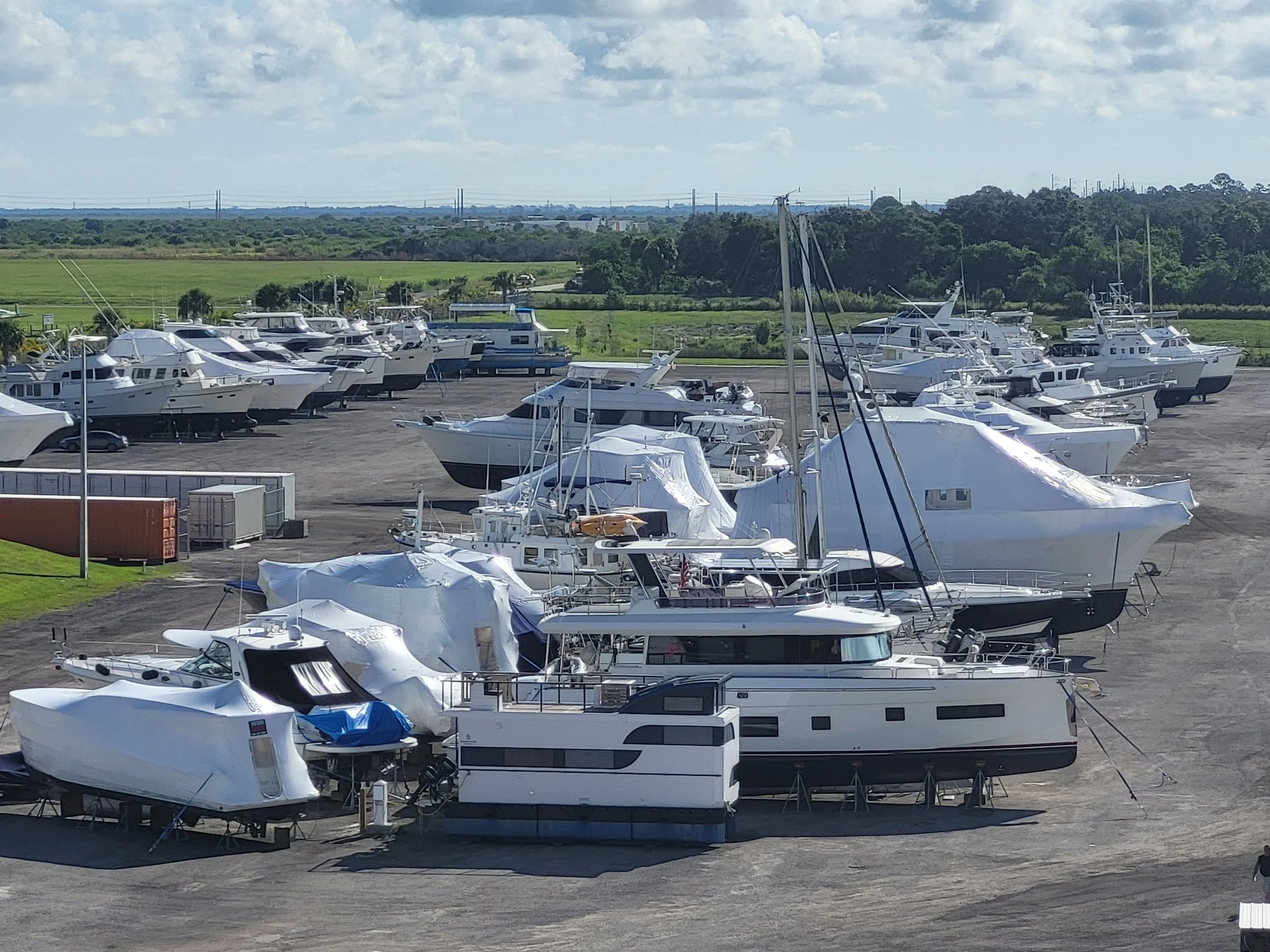
Dry storage (inside or out) offers a different approach: removing the vessel from the equation altogether. Choosing between keeping a boat in the water or hauling it for summer storage comes down to risk tolerance, logistics and insurance policies.
Boats stored in the water remain exposed not only to storm surge and wind, but also to prolonged sun exposure, biological growth, and the wear that comes with constant immersion. Lines chafe, fenders shift, and even well-protected marinas can become vulnerable under severe conditions.
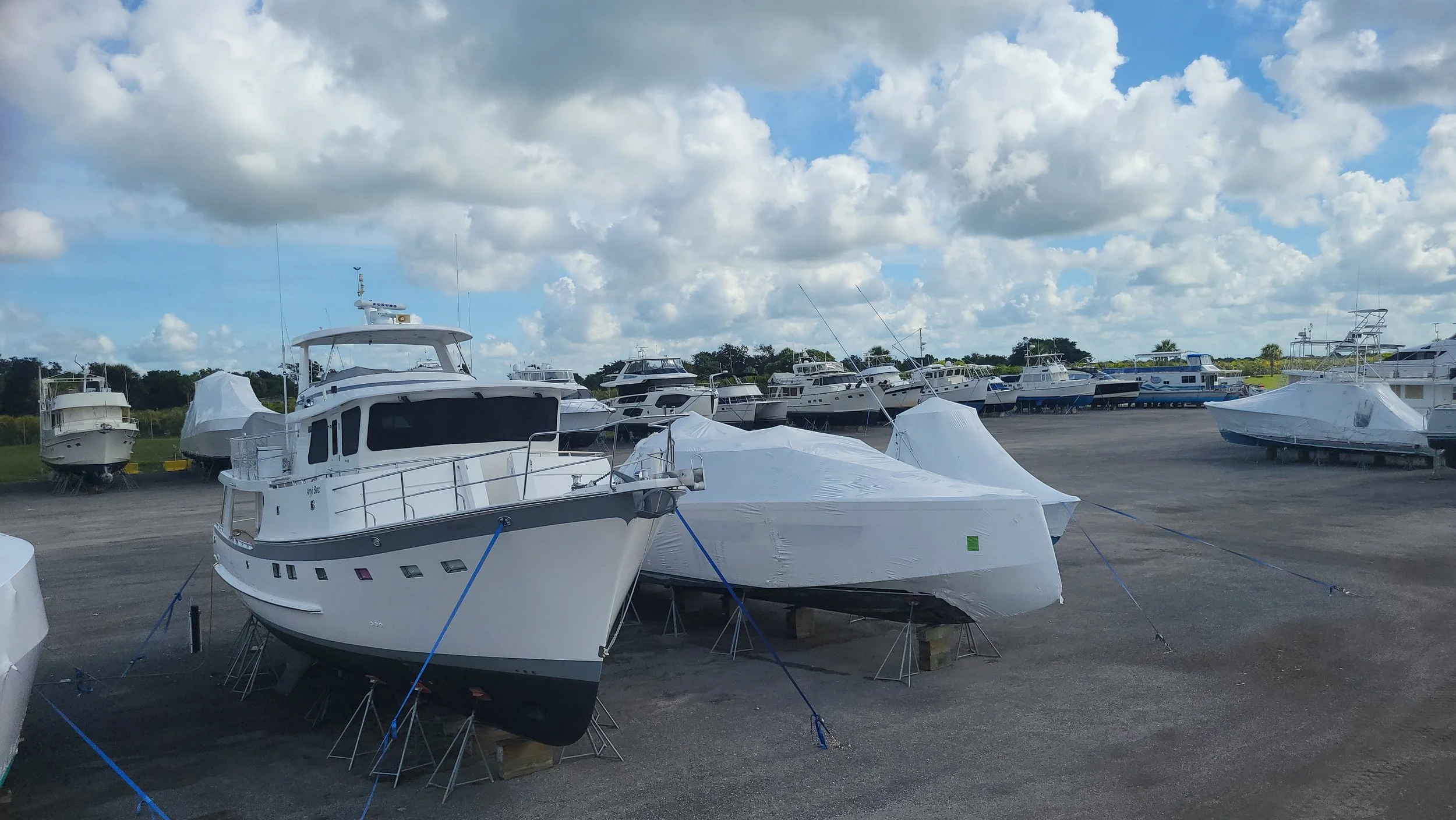
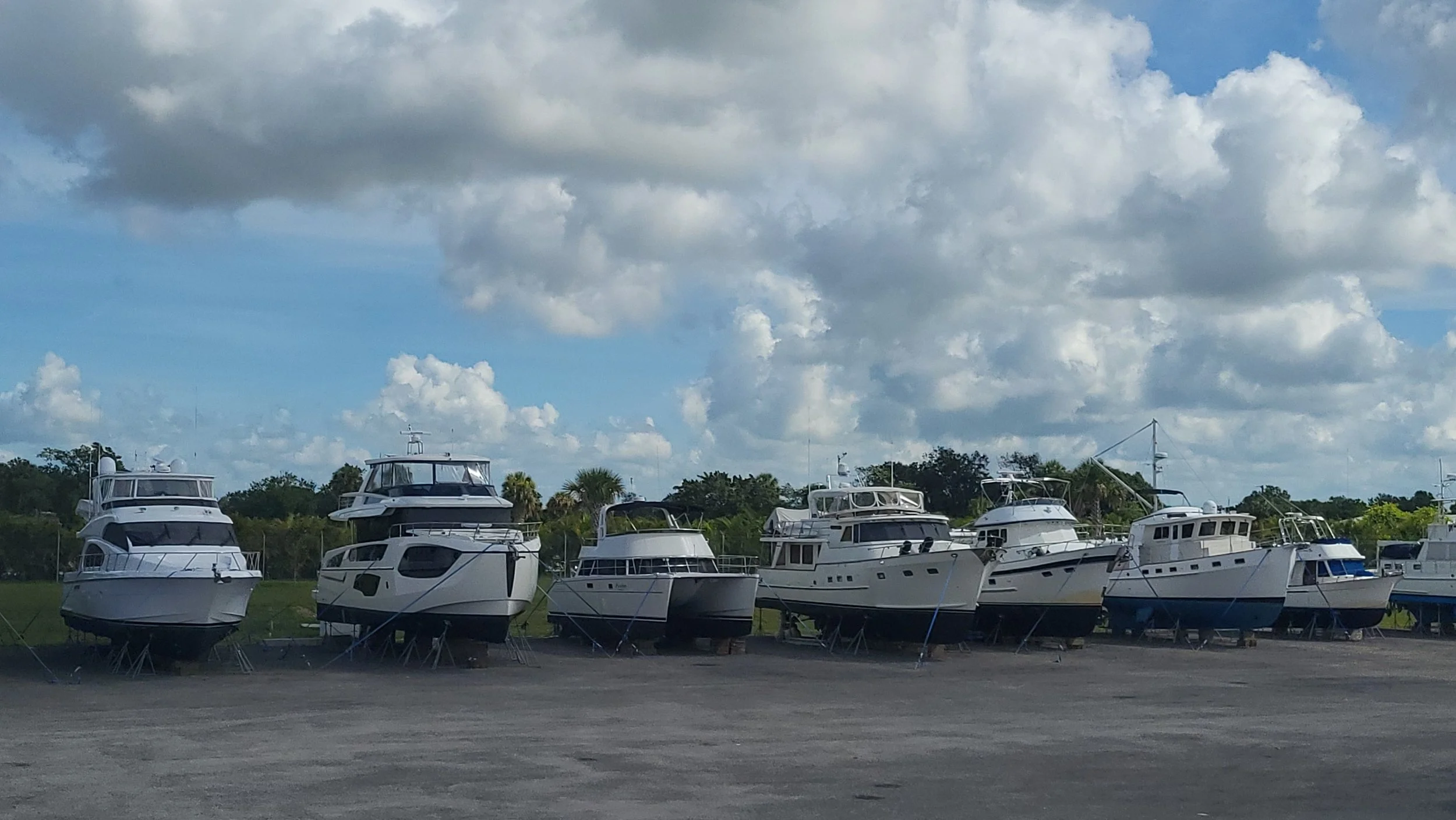
By contrast, boats stored on land, properly blocked, supported, wrapped, and tied down, are removed from many of these variables. Reputable facilities are engineered with storm planning in mind, often located inland and away from surge zones. For many insurance providers, this reduced exposure translates into more favorable coverage terms. However, hauling a boat to storage is not a “set it and forget it” solution. Summer storage presents its own set of challenges that require attention.
Managing Heat, Humidity, and Sun Exposure
Florida’s summer climate is relentless. Heat and humidity can take a toll on a vessel whether it’s in the water or on land, but the effects are often magnified in storage.
Interior spaces become especially vulnerable. Without proper ventilation or moisture control, cabins can develop mold, mildew, and persistent odors. Electronics, soft goods, and wood finishes all suffer in high-humidity environments.
Boat owners typically choose from several strategies:
Air Conditioning Systems: Effective but dependent on reliable shore power. System failures can quickly lead to issues.
Dehumidifiers: A popular option for controlled moisture reduction, again requiring consistent electrical supply.
Moisture Absorbers (DampRid-type products): Low-maintenance but limited in capacity.
Fans or Passive Ventilation: Useful for airflow, though less effective in peak humidity.
Storage Facility Monitoring: Some facilities offer weekly or monthly systems monitoring.
No Intervention: Often the least desirable option, particularly for extended storage periods.
Exterior protection is equally important. UV exposure can degrade gelcoat, canvas, and plastics. Shrink wrapping or full covers can provide protection, but they must be properly vented to avoid trapping moisture.
Routine washdowns before storage help remove salt and contaminants that accelerate deterioration under heat.
Monitoring and Security
One of the biggest concerns for boat owners, especially those traveling out of state, is visibility and security. Modern vessel monitoring systems have become increasingly popular, offering real-time data on battery levels, bilge activity, shore power status, and even onboard security. These Wi-Fi or cellular-based systems provide peace of mind, but they are only as reliable as their setup and connectivity.
Location can also play a major role in summer storage decisions. Inland facilities, particularly those with controlled access, offer advantages that extend beyond storm protection. Restricted entry, well-lit yards, security cameras, and reduced exposure to public traffic all contribute to a more secure environment. For absentee owners, this can be a deciding factor.
For many owners, a hybrid approach that includes technology plus human oversight offers the best balance. Check with your storage facility to see if they offer a weekly or monthly service. An alternative is to contract a yacht management company to perform regular checks. Physical inspections can catch issues that sensors might miss such as developing leaks, cover damage, or early signs of system failure.
So, Does It Make Sense?
The key is understanding that hauling is not just a protective measure, it’s part of a broader strategy. Florida’s summer doesn’t demand that you stop boating, but it does require you to think differently about how you care for your vessel. Proper preparation, environmental control, and periodic oversight are essential to ensuring the boat remains in good condition while out of the water.
For many boat owners, hauling out for the summer isn’t about stepping away, it’s about setting up preventative measures for what might come next.