
Paddling With your Dog
By: Denise Holmes
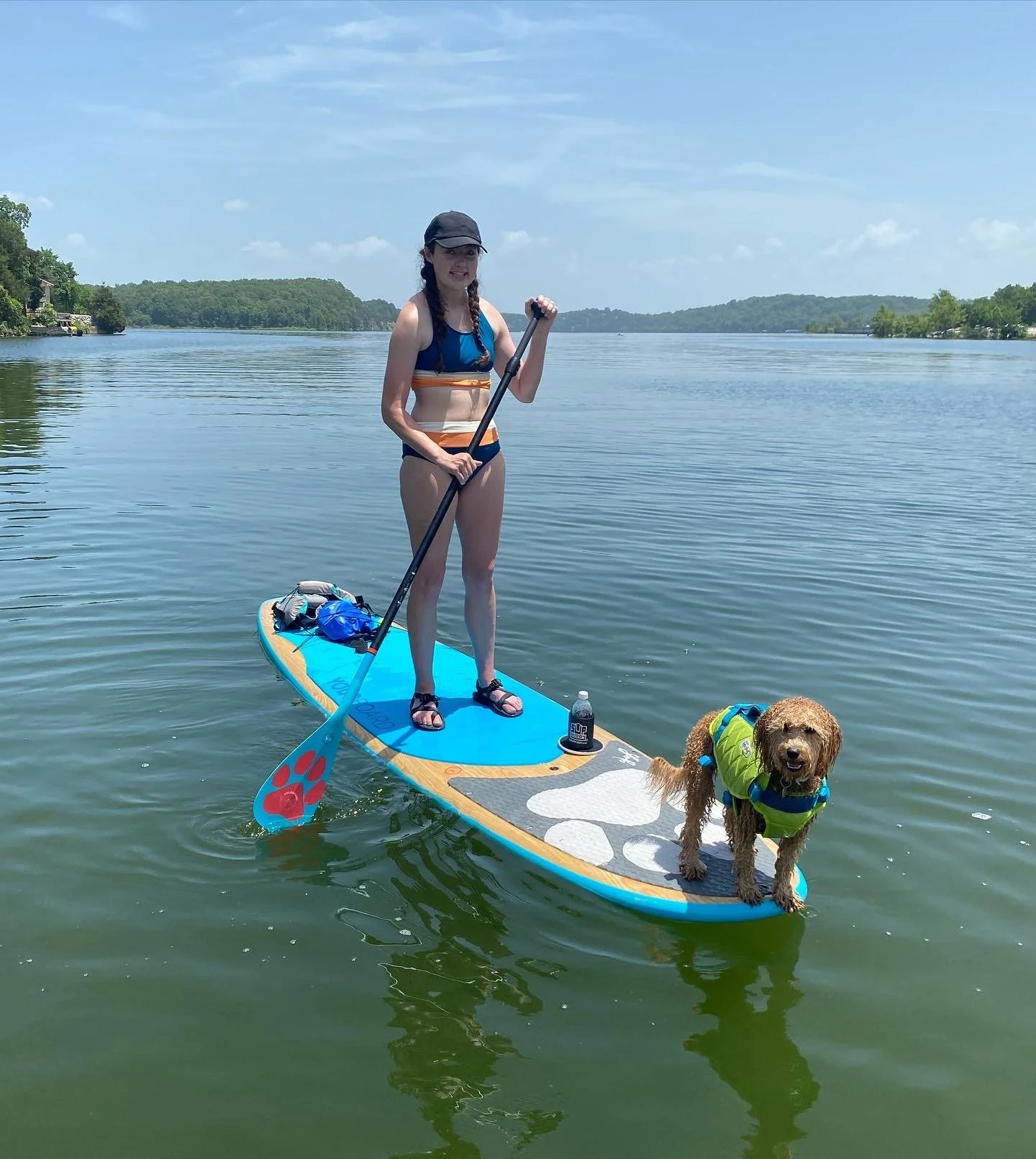
Motoring the open water of the Gulf is great, but there’s something special about exploring it by kayak, canoe, or paddleboard. From quiet bayous and protected estuaries to calm coastal waters and inland springs, paddling offers a unique way to experience the region while strengthening the bond between you and your dog.
For a successful outing you’ll need some preparation, safety equipment, and a little training. These things make the difference between a stressful experience and an enjoyable excursion. Whether you’re introducing your dog to a paddlecraft or planning your next coastal adventure together, taking the time to build confidence and prioritize safety helps ensure memorable days on the water.
Make Sure Your Dog Can Swim
It goes without saying, but nonetheless, make sure your dog can swim and is confident in the water. Start with a zero-entry, calm, shallow water source, like a lake or creek, that allows your dog to wade and experiment. Some dogs will take to it immediately and some will need encouragement. Throwing a favorite toy or wadding out with some high value treats and asking your dog to follow may help.
Once you master calm water, it’s time to try something with more movement. Don’t just ‘go for it’ assuming your dog will react the same. My dog was fine in creeks and lakes, but breaking waves made him hesitant. Regardless of how you introduce your dog to the water, go slow, keep it positive, and offer lots of praise. DO NOT just throw your pup into the water!
After your dog has experienced the water and had some fun, try it again with an appropriately fitted canine PFD with a handle. PFDs can feel awkward; your dog should wear one anyway. As for that handle, you will want it when it’s time to fish your paddle buddy from the drink.
Teaching Your Dog To Paddle With You
When I teach my clinics, we always start on land. This could be your living room, backyard, or the shore. Regardless of the vessel you choose, practice loading and
unloading, as well as turning around. A lot of pups already have cues for getting into the car or spinning in a circle, so don’t hesitate to use these or teach new ones. While practicing, be sure to pick up your paddles and mimic your strokes. Many dogs are leery of these movements.
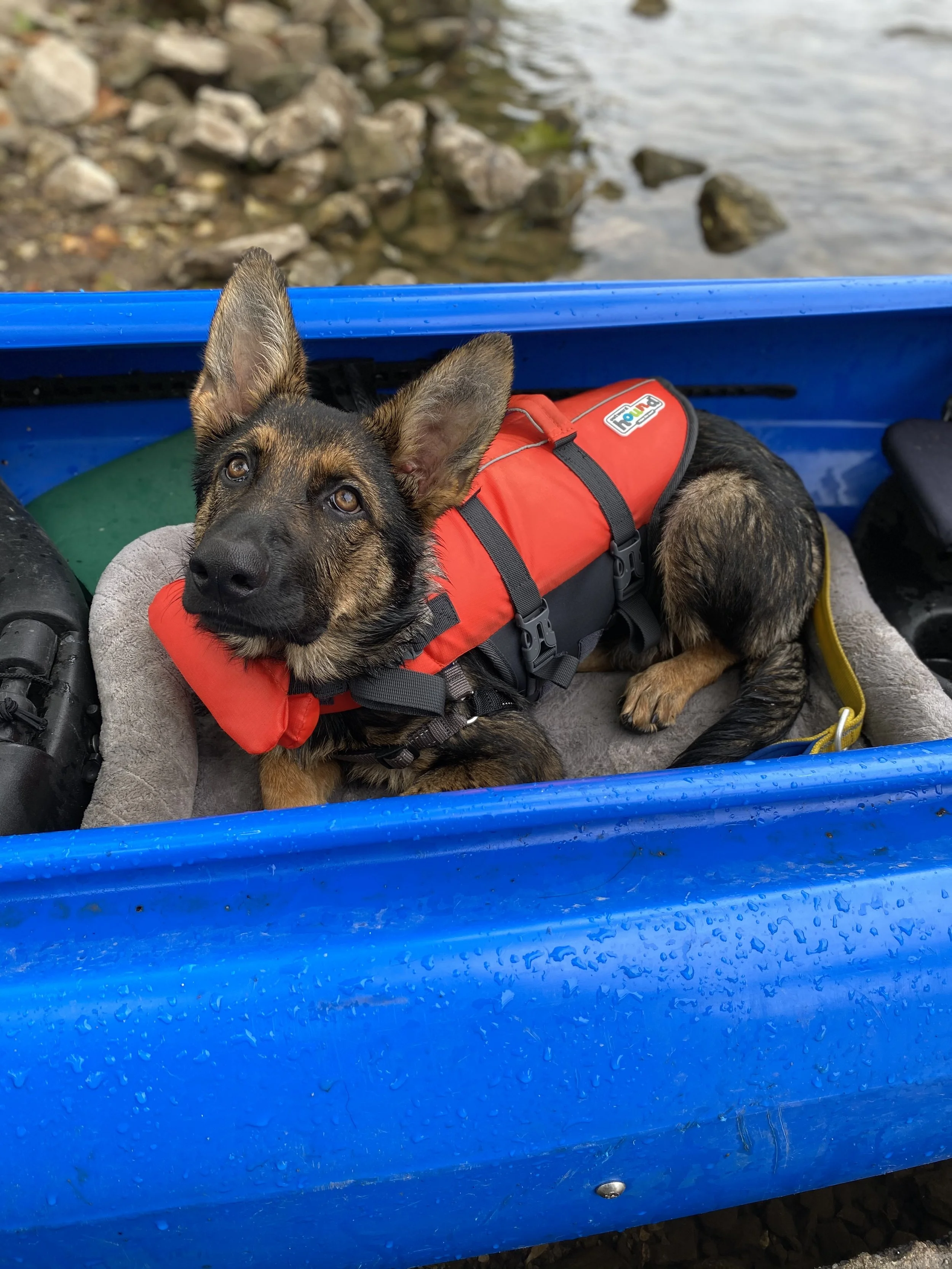
If your vessel’s surface is slick, consider a “surf mat.” This is simply a surface that provides some non-slip traction for your dog. A bathmat with a skid-proof side or a yoga mat cut to fit will suffice.
Once your pup is comfortable with the PFD, their body position in relation to yours, and the movement of the paddles on land, you’re ready for a practice launch with rescue. Bring a friend with you the first time; you may need some help in the water or a shore catch if your pup bails and heads for land.
You 100% need to know how to get your dog back in your boat or onto the board in case of a spill. So put your dog in the water and PRACTICE. I make ALL my students do this before letting them get too far from shore.
How you accomplish this task will depend on your vessel, the size of your dog, and your own strength. When on a SUP or kayak, I prefer my dog to board from my right. I reach across my body with my left hand and grab the PFD handle. When his front paws are up, I use my right hand to help boost his back end. Once your dog is back aboard, brace for the shake!
Quick Tips For Paddling With Your Dog
Start on land
Make sure your dog is comfy in his properly fitted canine PFD
Get your pup used to the movement of the boat/paddles
Have a ‘surf mat’ to help your dog feel stable-footed
Have a friend/spotter
Practice retrieving your dog from the water
Don’t go too far from shore until everyone feels steady
Gulf Coast Paddle Recs
Go-fast boating is great for catching wind and getting places, but you’re missing a lot. If you have the room for a paddlecraft on your boat (inflatable SUPs are perfect for this), you’ll have the opportunity to explore all the wonderful nooks and crannies of the Gulf Coast. There’s something to be said for being a little closer to the water, going slow, and enjoying the sights and sounds of a natural environment that’s mostly undisturbed.
The best time to paddle is generally early mornings or late afternoons when winds are low and wildlife is active. You can access these places via motorboat from the Gulf of Mexico and/or by land, though “Gulf access” may mean anchoring in the Gulf then paddling to your destination or finding a marina with transient slips. Recommended locations with dog beaches and special requirements are noted, stretching from Florida’s Gulf Coast to Texas.
Lovers Key & Estero Bay Aquatic Preserve | Ft. Myers Beach, FL
Off-leash dog beach on Lover’s Key. At high tide, there isn’t much beach.
St. Joseph Sound | Dunedin, FL
Honeymoon Island State Park Dog Beach is located at the southern tip of the island. Dogs must be on a 6 feet leash at all times.
Western Lake | Grayton Beach, FL
The inlet from the gulf is only available when heavy rains raise the lake’s water level. Only resident dogs with a permit are allowed on the beach in Grayton.
Santa Rosa Sound/ Gulf Islands National Seashore | From Pensacola to Okaloosa Island, FL
Dog Beach East in Pensacola requires all dogs be on a leash no longer than 8 feet. Dogs are not allowed on any beach in Okaloosa County.
Mustang Island Paddling Trail | Corpus Christi, TX
Dogs are allowed on all public beach areas, but must be on a leash no longer than 6 feet.
Bio: Denise Holmes is a Canine Lifestyle Expert and professional dog trainer with 25+ years experience helping pets and people live life better together. Find her at www.LoveTrustTeach.com