
Fishing Reports: Fall 2026
Bonita Springs to Marco Island
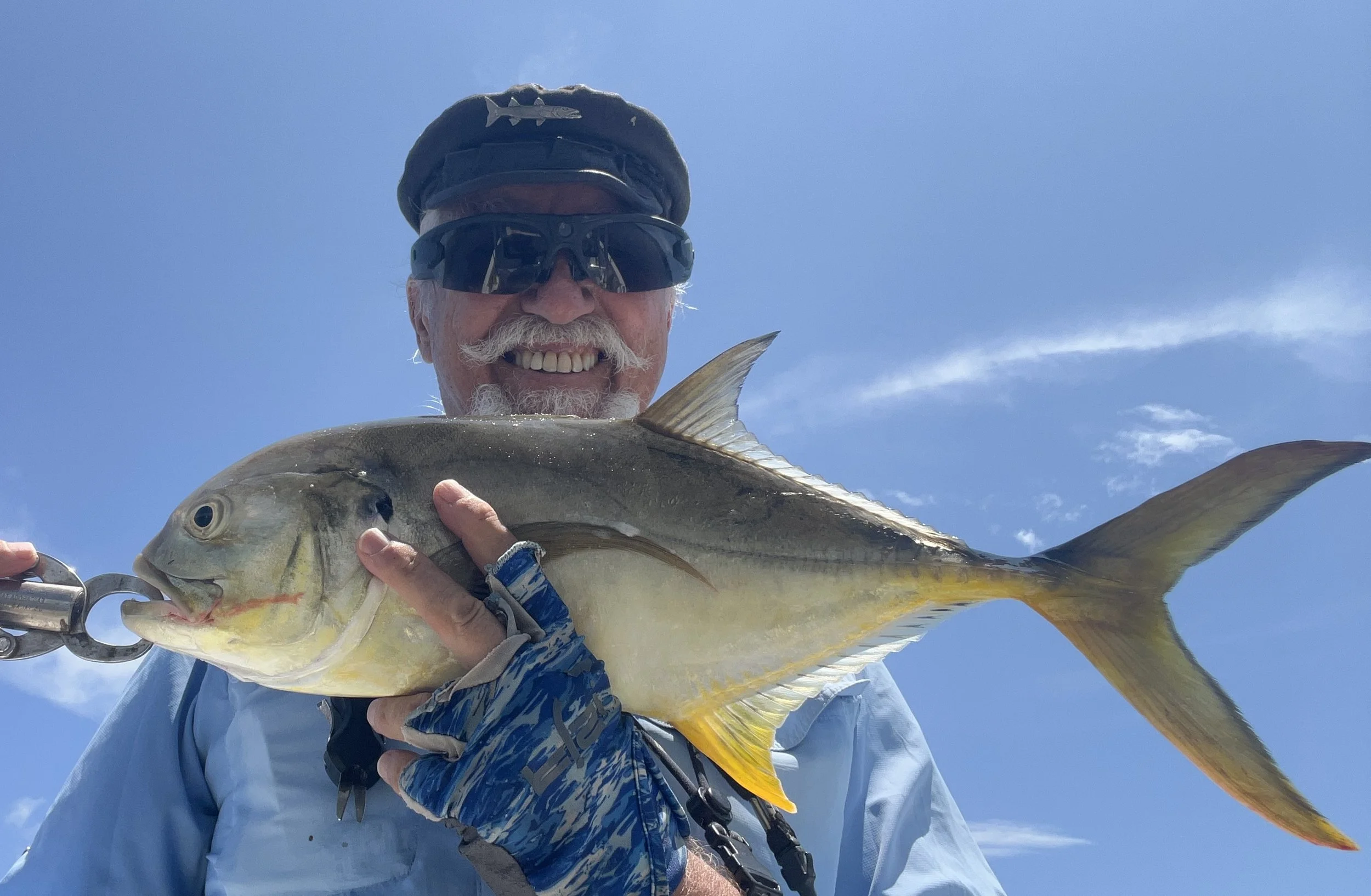
By Captain Barry Cuda
Well, we’re definitely into the summer patterns now. Water temperatures are between 80 and 90°, with the weather usually calm in the mornings and windy by midday or afternoon. Big thunderstorms have come cruising through in the afternoon, usually of short duration, but definitely something you want to watch out for. The lightning is vicious and can be dangerous, as Florida is the lightning capital of the world and has the most deadly strikes
With the summer rains, there’s a lot more freshwater coming down the creeks. This means we have to be aware of the effect of freshwater on our fish. Let’s focus on our three most popular fish: redfish, snook, and trout.
Redfish are more aggressive in temperature ranges of 68 to 82 degrees. Our water is 85 degrees plus right now, so they will feed most actively early morning, late evening, and at night. Deep water in the shade of mangroves is always a good bet. During midday, they seek cooler, oxygen-rich water around passes, deeper channels, and areas with current. Focus on moving water — passes, creek mouths, and deeper potholes.
Snook do fine in freshwater, so salinity is not a problem for them. They often move into rivers and canals after heavy rains. Sudden drops in salinity from heavy rainfall may stop them feeding for a day or two. They may relocate to areas with more stable conditions, but mainly snook will be near passes and beaches. This is especially the time when they will be found cruising very close to shore along the beach, especially in the early morning. After heavy rains, look farther upstream along mangrove shorelines, canal mouths, and creek systems.
Sea trout may look for saltier water when there are large amounts of rainfall. They will leave estuaries and seek saltier water near inlets, deeper channels, or the Gulf. Following tropical rains or freshwater releases, trout fishing often improves closer to the passes or along the outer grass flats where salinity is higher. When salinity settles down, look for them in the potholes and deeper spots on the grass flats.
Live bait, especially shrimp and crabs works well for all of them, and live whitebait (shiners, greenbacks, threadfins, etc.) are great for the large fish. Cut ladyfish or mullet work well when you have a bit more patience.
Stay safe out there, and tight lines!
Take care,
Capt. Barry
Tampa/St Petersburg
By Capt. Dylan Hubbard
Inshore
Fall patterns are beginning to take shape across Tampa Bay, and inshore anglers have plenty of opportunities. Redfish schools are gathering around oyster bars, mangrove shorelines, and shallow back bays. Focus your efforts during mid to low tides, when these fish are actively feeding and easier to locate.
Snook are making their seasonal transition from the beaches and passes back into the bay as water temperatures begin to cool. Large cut baits and live whitebait remain top producers, but shrimp will become increasingly effective as the season progresses.
Speckled trout fishing continues to be excellent throughout the region. Look for trout along grass flats, mangroves, oyster bars, backwaters, docks, and bridges. Anglers fishing after dark are seeing especially strong action around dock and bridge lights, particularly during the new moon phase.
Sheepshead are also becoming more active around hard structure. Target docks, bridges, jetties, piers, and rock piles using shrimp, oysters, clams, or fiddler crabs fished close to the bottom.
Nearshore
Nearshore action remains steady with a variety of species providing excellent table fare.
Lane snapper are plentiful in 60 to 100 feet of water, readily taking squid, threadfin herring, and live shrimp.
Mangrove snapper are showing up in greater numbers offshore, but anglers are still finding quality fish closer to shore. Cut threadfin fished on a double snell rig continues to be one of the most productive presentations.
As cooler weather arrives, hogfish activity is increasing. Concentrate on smaller pieces of structure in 30 to 60 feet of water, where live shrimp on light tackle often produces the best results.
When water temperatures settle into the 72- to 78-degree range, kingfish, and Spanish mackerel will begin staging along the beaches. Trolling with planers and king spoons is a proven technique, while flat-lining live baits can deliver fast-paced action.
Offshore
Offshore anglers should mark their calendars: gag grouper season opens September 1 and runs through September 14. Early in the season, warmer water pushes keeper-sized fish into deeper areas, so focus on depths of 120 feet or more off Florida's central Gulf Coast. Heavy tackle paired with large live or dead baits offers the best chance at landing a quality gag.
Red grouper and scamp grouper continue to provide consistent action in deeper water. Large dead baits, including mackerel, bonito, and squid, remain reliable choices.
Mangrove snapper fishing also continues to shine offshore, with cut threadfin on double snell rigs producing steady catches. Anglers can also expect opportunities for yellowtail, mutton, and vermilion snapper, along with porgies, and other reef species. Pelagic action is improving as well, with increasing numbers of wahoo and blackfin tuna showing up offshore.
Sarasota to Englewood Fishing Report
By Captain Matt Davie
Another summer has come and gone, and we're pretty thankful for the rain that's helped keep water temperatures a little cooler. Still have to weather a few storms in the next month or 2, so it’s best to be prepared as things can still pick up quickly.
There's a few things that I always have to keep me dry and safe when I'm on the water. In my boat I have ponchos for the guest that didn't expect to get rained on. One of the things I have that I’ve thankfully not had to use yet is a hand bilge pump. These might be in the $50-70 range, and for that price, the peace of mind goes a long way.
Florida storms typically bring lightning with them, and if you can hear thunder you're too close to the lightning. Whenever you hear your line buzzing or see your fishing line actually floating, it's time to go. Those are signs that lightning could be imminent. Make sure you're seeking cover, and remember that a tree is not a safe place to wait out a storm.
Fishing should really fire up on the next water temp drop. Something that I primarily did in the summer time and can still do in the fall is night snook fishing. Bait is usually still pretty abundant, using live or artificial under dock lights. You can still get your Sarasota Slam under these lights. Who knows, you may get a surprise grand slam, with the small tarpon that are pretty much resident.
There are also surprise fish under the lights. Triple tail or cobia depending where you're at. Fly fishing is also a very common technique, although I don't do very much of it. Spend a little time getting familiar with the waters you want to fish. Come back during the evening on your same track lines. Safety first so you will know what’s there. All in all, it's definitely a way to beat the heat.
Contact me with any questions, I'm always willing to help.
Thank you,
Captain Matt Davie
Charlotte Harbor to Ft Myers
We've dealt with a lot of windy weather along the Southwest Florida coast this summer, and it's kept many anglers off the open Gulf. Let's hope we are seeing the breezes settle down with September's arrival, because there are lots of reasons to head offshore.
The month-long gag season starting September 1 has grouper diggers excited, and with good reason. These fish are generally regarded as much better table fare than their red cousins, and as a bonus are usually parasite-free. Fishermen who want to target gags will do well to remember that they aren't just red grouper with a different color pattern. They feed differently, and that affects their habitat preferences also. While red grouper are happy to sit in a hole and feed on anything that drifts by (even if it's been dead a few days), gags like to hunt their prey. If you're using natural bait, a live pinfish or blue runner is usually far more appealing to them than a frozen sardine.
Artificial lures can also be used for gags. Slow pitch jigs are popular these days, although the more traditional diamond jigs and even bucktails still catch a lot of fish. Remember the circle hook law applies, even if you're just tipping a bucktail with bait.
Deep-running lipped plugs are another good option, especially if you want to troll along the many rocky ledges that run parallel to the coast. (Don't know where they are? The stone crabbers mark them for you. When crab season reopens, go mark some of their floats so you know where to go next time.) Try to get your lipped plug within about 10 feet of the bottom. But you don't want to actually drag it in the sand; it won't be long before you snag something and there goes your $30 lure.
When you're targeting red grouper, it's important to fish tight to the structure. Gags, however, often hang out near cover but not right on top of it. One of their hunting techniques is to sit on the bare sand up to 50 feet away, waiting to chase anything that gets too far from a safe haven. Think about that when you're deciding where to drop your bait. Yeah, they might be in the thick of it, but if that's not producing, try to think like a gag.
Greater amberjack will also be opening September 1, and red snapper will reopen after having been closed for the month of August. Gray triggerfish are open too. In fact, September is looking like it might be one of those rare times when everything offshore will be open.
It's exciting and also terrifying, because usually when we get something good we get something bad to keep us from being too happy. Hopefully it's not a storm with a name on it ... but, then again, this is the peak of hurricane season. Tight lines, y'all.
Don't forget to subscribe to be notified when a new video drops: youtube.com/@FishinFranksClub
Tarpon Springs to Inglis
Fall Fishing! What a wonderful time of year with amazing fishing. If you wanna have a blast and pull some huge fish that are great on the dinner table as well, September is your month. September 1st, Gag Grouper season opens and is open for the entire month. Blue finn herring, live pinfish, and also may do some trolling with big lipped plugs to get these awesome fish!
We will be using whole thread throughout the fall, and our party boat will be fishing 8-hour trips for $100 per person the entire month for gag grouper. We also have our private six passenger boat that will be fishing 8-hour, 10-hour, and 12-hour trips.
If you’re going out in your own boat and trying to find these fish, you will want to look for structure. This could mean, ledges, wrecks, rock piles, etc. — these fish love structure. If you find the structure, you will find the fish. Give us a call or book a trip with us on our website, thunderfishingco.com.
Tight lines and I hope everybody has a great fall season!
Thanks,
Captain Chaz
Thunder Fishing Co.
chazcorradini@yahoo.com